Sunday, April 17, 2011

Lobsters are Hemostatic Agents Too, Part II

Okay, so there are no lobsters in this post. I know, I know: it's sad. I'm crying inside too. So for all those missing lobster references, I have decided to include this adorable picture. Who couldn't love that little lobster's face?

When I edited my last post, I half-wondered how many people went searching on the net for homemade chitosan recipes. "Mmmm tastes like lobster." Again, I must stress to the adventurous teenagers out there: Chitosan is not to be covered in butter and eaten, even if it is made from lobster exoskeletons.

Anyway, onto the next group of hemostatic agents.

Thrombin

Topical thrombin products like Evithrom, Recothrom, and Thrombin-JMI are considered part of the biologic hemostatic agents group. Naturally derived from an enzyme involved in hemostasis, thrombin products promote the body to form clots.

Sixty years ago in some dark castle without cable TV, some mad scientist got bored, thought "hmmm, I wonder what would happen if I churn blood like butter" and now we have thrombin. "It's alive! It's alive!"

Seriously, thrombin was isolated from clotted blood products sixty years ago and now we have a perfectly bio-identical hemostatic agent. Happy day.


Thrombin products come in several different types based on the type of plasma it was made from. Cow plasma products such as Thrombin-JMI (King Pharmaceuticals). These products can produce severe histamine reactions and increased antibodies in hemodialysis patients. So the side effects in some individuals have been dangerous increases in coagulation like pulmonary embolisms and on the opposite spectrum, severe decrease in clotting leading to hemorrhage and death.

Not a good choice to use as a hemostatic agent unless you want to create an even bigger mess. "Darn! The cow killed another one." (Image from http://skirmisher.org/weird-shit/cow-chucks-grass-prefers-live-chicken-dinners-as-next-best-thing-to-kfc/)

Companies such as Evithrom, Omrix, and Johnson & Johnson developed human plasma derived thrombin, which has less side effects.

Recombinant human thrombin products like Recothrom (ZymoGenetics Inc.) were also created by companies to reduce the amount of side effects that occurred with thrombin administration.

Cyanocrylates

Dermabond: Need I say more. It's a beautiful product that is commonly known about. People love it, because its the superglue of suturing products.

The cyanoacrylate family of agents are liquid monomers that reapidly react with water to form glue-like polymers. Dermabond and other cyanoacrylates are great for replacing sutures. These are more a class of wound closure products than hemostatic agents, but they deserve some attention. Otherwise they will feel left out and develop psychological issues... and have to see counselors spending hours talking about how we didn't give them attention and so that's why they have to go steal stuff from dollar stores. So, let's talk about cyanocrylates.

They were invented in 1942. A lot of the most amazing medical devices, surgeries, and triage advancements were developed in World War II. The worst war in the world's history produced some of the very best medical inventions of the 20th century. Then in Vietnam, another tragedy of humans killing humans, medicine again benefited from the heroic deeds of military medicine.

Dermabond and its constituents (octyl-2-cyanoacrylate, butyl-2-cyanoacrylate) have the advantages of rapid application, faster tissue repair time, and less need for suture follow up. They also act like waterproof barriers. (The following image shows a shoulder wound sealed with dermabond instead of sutures. Image taken from http://www.orthosupersite.com/view.aspx?rid=25358)

Dermabond and superglue originally evolved from the same product back in the 1940s and so have very similar capabilities. I have talked about superglue as a wound sealant in a past post.

Superglue can be a good disaster medicine tool. It is around the house, easy to come by, and has many of the same properties as dermabond, but with some major flaws: Superglue cannot and should not be used in deep and/or jagged-edged wounds. It also is acidc in nature and produces a chemical burn to tissue it touches. Lastly, it bonds to skin extremely well and a naive person can get glued to their patients... which works well for those loving couples that never want to be separated. But as for the rest of us who want to move on in our lives, superglue should be used with caution. Also, for the love of all that is medical: please don't use superglue (or dermabond) in armpits and buttcheeks. Not a pretty picture.

Dermabond, on the other hand, was chemically created to have a less acidic nature than its commercial cousin, but it does have its own cons. Just like superglue, it is not a good agent for wounds with jagged edges. Also, dermabond can easily breakdown in the presence of antibiotic ointments or petroleum jellies. (A good rule of thumb is to avoid scrubbing the wound or applying anything to it for 7 days after dermabond use.)

Cyanoacrylates are largely used for stopping bleeding in small wounds as a waterproof barrier, which makes them great in wilderness and disaster settings where rain and flooding can be more prevalent. As for their fastness, full binding strength is achieved in less than 2.5 minutes.

Glutaraldehyde Cross-Link Albumin Agents:

Okay, glutaraldehyde cross-link albumin agents is a mouthful to say. So let's just call them Glutes, because everyone can handle Glutes a lot better.

Glute products, like Bioglue, are most commonly used in cardiovascular surgeries, especially those involving aortic dissections and valve replacements. These are produced from companies like CryoLife and created in 1999. They come in cartridges and yes are shot into the wound. Before a bunch of crazy teenagers gets excited about shooting stuff into people's wounds, Bioglue products act more like cheese-wiz then staple guns.

Guess what. These producats are also made from cows. So the next time you're eating that steak, just think, that T-bone could have been a hemostatic agent. Mmmm Mmm good!

The cons with these products are that they may have mutagenic effects. So forget about the vat of toxic waste or the radioactive spider, you can be a superhero from messing with your Glutes. These are another product that shouldn't be applied near nerves and may also cause allergic reactions.

Morals of today's post: Cows can kill. Superglue is your friend or it can glue you to your friend. Don't stick glue in armpits or on butt cheeks. And handle your Glutes with caution.


Well, that's enough medical talk for today. TTFN.

Tuesday, March 22, 2011

Lobsters are Hemostatic Agents Too, Part I

You know there is something to be said about the ingenuity of our current hemostatic agents. I mean seriously, who would've ever looked at a lobster and thought, "Hmmm, I bet that's going to make a great hemostatic agent.

Well, some smart and now rich beastard did, and as a result we have Chitosan, one of the most common hemostatic agents on the market. (Chitosan is derived from chitin found in the exoskeletans of crustaceans.)

Another brilliant hemostatic agent made from something you wouldn't expect is Arista, which is a polymer made from potato starch. (Image taken from http://www.flickr.com/photos/beckendorf/ )

So we have hemostatic agents from sea cockroaches and Idaho spuds. In addition to those, there are less commonly known but just as ingenious hemostatic agents that deserve attention. The following is a starter list of the various products out on the market.

Gelatin Foams:
There is always room for jello.

Normally, I like to promote gelatin powder, which is a nonsterile, but effective hemostatic agent. Why? Because it has a few added benefits:

First benefit: You will not get hauled to the nuthouse for using powdered gelatin as a clotting agent. "I swear she said a lobster would stop the bleeding!" equals time in a loonybin.

Second benefit: It is a fast clotting agent that is very easy to buy. Seriously, you don't have to drive down to Mexico and beat off drug cartels to get it.

But for the purposes of this post, I am going to talk about the more surgical grade gelatin foams. Who doesn't love a good foam? Gelatin foams began to be used in 1945 and were manufactured from the gelatin found in animal hides. These gelatins were whipped and baked until the formed a sponge foam.

They come as a powder which you mix with a sterile saline solution (preferably) or sterile water to form a paste.

These products include: Gelfilm, Gelfoam, and Surgifoam. Gelatin foams create a type of matrix that instantly clots a wound site. These are used mainly for small blood vessel bleeds, bone bleeds, and venous seeping.

The benefits are that they are absorbed by the body within 4-6 weeks, have a neutral pH, and are nonantigenic or don't cause antibody reactions.

These can be used with oxidized cellulose wrapping. (This is shown in the Springer image to the left)

There are some cautions with these products. Gelatin foams swell. So, they should not be used in closed spaces within the body, especially near nerves.

Truthfully, you shouldn't be sticking anything, even your hands, in people's bodies to begin with if you are not a trained physician. This goes double for procedures in wilderness and disaster environments. So keep your hands out of other people's orifices. Leave that for us doctors: We get selfish over those things. "My prostate exam. Mine. Mine. Mine."

There are particular surgical techniques that we use gelatin foams for which include penetrating traumas where organs are pierced through. We use an oxidized tubular plug filled with gelatin foam, which is held intact by titanium clips or sutures, and insert it into the hole. I'd tell you more but the rest is a trade secret. ;)

[Note: Trade secret is another term for "I'm not telling just to prevent a bunch of doped teenagers from trying it with their grandma's green jello and a straw."] (Image taken from http://simplyrecipes.com/recipes/grandmas_pineapple_cucumber_lime_jello_salad/)

One of the companies that manufactures gelatin foam products is the Pharmacia and Upjohn Company, which is a subsidiary of Pfizer.

I still prefer gelatin powder, because it's around the house. In fact, I have used a mixture of gelatin powder, a few drops of sterile water, and some topical antibiotic on a baby's hemorrhaging wound and it worked effectively within seconds.

For more information on Gelfoam.

Oxidized Cellulose:

These products are called Surgicel Nu-Knit and Surgicel Fibrillar. Developed in 1942 from decomposing wood pulp to regenerate cellolose fibers, oxidized cellulose conforms more rapidly to its surrounding environment than any other hemostatic agent. (Image provided by the medical kit company Baycan http://www.baycanmedikal.com/eng/index.php?option=com_content&view=article&id=14)

Oxidized cellulose creates a clotting matrix that has a consistency similar to cotton. With its low pH, oxidized cellulose has a great antibacterial effect. It doesn't stick to surgical instruments or gloves and it typically dissolves in the body in 2 to 6 weeks.

Do not moisten before use, because it has a greater hemostatic capability when it is dry.

Cautions: It may cause inflammation of the surrounding tissue, so don't use it anywhere near nerves. And for the love of all that good and holy, don't use it on hemorrhoids; it's not a pretty picture.

It is manufactured by Ethicon, Johnson & Johnson.

Bone wax:
Historically, bone wax used to be a mixture of salicylic acid (made from the inner layer of white willow bark), almond oil, and beeswax. (Image taken from Cardinal Health showing their product Sharpoint Bone Wax http://www.cardinal.com/us/en/distributedproducts/ASP/901.asp?cat=surgerycenter)

Currently, surgeons use a nonabsorbable mixture of paraffin, isopropyl palmitate, a wax-softening agent, and beeswax. They apply is to the cut edges of bone to stop bone marrow bleeds. It blocks the bleeding channels in bone marrow, and is easy to handle. You seriously just wipe the stuff on the bone edge like a jelly puddy, but after you are through clotting the wound remove as much of it as possible to prevent bone granulomas from forming (only in 2% of cases).

I have seen bone wax used to stop bleeds from the cut edges of the sternum during cardiothoracic surgeries.

Companies like Johnson & Johnson and Ethicon Inc. market and sell bone wax to hospitals.

Ostene:
This is a pluronic copolymer blend that is a biocompatible alternative to bone wax. They look and feel the same. The use is similar to bone wax.

The only difference is that ostene is water soluble and bone wax isn't.

This is marketed by Ceremed Inc. in California.

Microfibrillar Collagens:

You know when a group of hemostatic agents have enough different names to put a CIA agent to shame, they are seriously cheap to create. Some of the products within this group include Helistat, Helitene, Ultrawrap, Avitene Ultrawrap, Instat, Avitene, EndoAvitene, Avitene Flour, and Avitene Ultrafoam. (Image is of Avitene Flour taken from Bristal Healthcare which is a distributor of these products http://www.bristalhealthcare.com/avitene_63.html)

These products are made from cows. No. Rubbing a cow on your wound doesn't work either.

These products come in various forms: sponges (Aviten Ultrawrap, Aviten Ultrawrap, Helistat), pads (Instat), fluffy white powders (Instat powder, Helitene, and Avitene Flour), and nonwoven compressed sheets (EndoAvitene, Avitene).

Microfibrillar collagens (MFC) work by increasing the surface area for platelets to react upon. Platelets are blood cell fragments that are involved in clotting. Hemostatsis occurs within 2 to 5 minutes. It doesn't swell and is absorbed within 8 weeks.

Because MFCs work through platelet clotting, these are not effective in patients who have thrombocytopenias. On the other hand, it works exceptionally well in patients with normal platelets even under massive amounts of heparin.

Other facts: MFC is most successful in treating a large oozing bleed. It sticks to gloves, so it should be applied with DRY surgical instruments. Also, remove excess MFC from the wound site because it binds to nerves and dermatome surfaces causing pain and numbness.

Companies that manufacture these products include: Davol (Avitene Flour, Avitene, EndoAvitene, Aviten Ultrawrap and Ultrafoam), Integra Inc. (Helitene and Helistat), and Ethicon Inc. (Instat).


Morals of the story: Keep all hemostatic agents away from nerves. Keep your hands out of bloody holes. And don't use expanding hemostatic agents on your hemorrhoids.

Have a nice day!

This is Christine your friendly neighborhood medical blogger signing off. TTFN!

Friday, March 18, 2011

Truthfully Turmeric

Before I begin with the wonderful and talented Mr. Turmeric, I do have to explain why I have been absent for the last year.

I know. I know. It seems like forever. And I still owe your for all the search parties you sent out looking for me. And for calling all those cops to see if my body was found dead in a hospital somewhere from the stress of medical school and board exams.

But I have an excuse for my hacker's tan and alien-abductee-style disappearance: I was preparing for my residency. Hey. Don't blame me: the application process is evil spawned by satan. So evil and twisted that scientists have been studying its affects on the minds of future doctors for years. It is up there with the Spanish Inquisition and forcing people to watch Barney. Scientists have linked it to eye twitching, nail biting, empty bank accounts, and butt-kissing-chapped lips.

The process involves some seriously complicated steps, involving ticking off environmentalists and being filled up by every airport security official for 10,000 miles.

Step one: Fill out enough paperwork to kill six rainforests and the cherry trees in your backyard. This is done to get you to learn how to brag about yourself.... Some scientists believe that this is the basis for the Doctor's God-complex.

Step two: Pay enough money to make Donald Trump smile. This step ensures that proper handling of your paperwork is made.... Well, proper as in... ahem... series of online disasters resulting in deep and mystical wonderments as to why any of the application materials were on paper to begin with. Note: The majority of applications are done online. You just tricked into doing secondary applications for some of the residency programs that believe in further torture.

Step three: Get fat on airplane peanuts and get enough action from TSA patdowns to last ten marriages. I swear a few of them buy me dinner afterwards.

Step four: Go through interview interrogations that would make the CIA proud.

Step five: Live the life of an insomniac worrying over whether or not you'll get into a residency program.

Step six: Find out that you matched to a program. Spend the next few days twitter-pated that God blessed you with the perfect residency program that will turn you into the kind of doctor that you have been hoping to become.

Step seven: Suddenly realize that you're going to be medically responsible for saving lives.

Step eight: You're still stuck on step seven. The shock is just too much. ;)

Now, that's why I have been busy. :D

The Talented Mr. Turmeric

Related to ginger and galangal, turmeric is a spice ground from the dried rhizome of a yellow flowering perennial plant found in India known as the Curcuma longa or Curcuma domestica.

Turmeric is used as a major ingredient in curry and has been proven to have strong antiinflammatory properties. In Europe, turmeric has been used to provide relief for stomach ailments, gallbladder conditions, rheumatoid arthritis, and as a potential adjuvant immunosuppressant.

The active ingredients in turmeric are volatile oils called curcuminoids, the most widely studied of which is curcumin. It has been shown to have antiviral, antineoplastic and antioxidant properties.

But the property that I want to talk about here is its pain killing ability. Yep, your curry cuts pain by being a Cox-2 inhibitor. A study in the Journal of Natural Remedies showed that a dose of 100mg of turmeric had significant analgesic properties.

Mix 1 tsp of turmeric with 1 tsp of neem and 2 tsp of ginger with water to make a paste. Spread the paste on the affected area and then wrap with a bandage. Drink 100mg/kg of turmeric with 1 cup of warm milk before bedtime.

Seriously?! You seriously have to eat that much turmeric? Well, yeah, if you went to Walmart and bought that $0.50 cent turmeric. Now, don't give me that it was on sale. I buy my shoes on sale, but I don't use them treat someone. Okay, well, I use them to treat me. :D But retail therapy is an entirely different story.

Turmeric needs to be purchased in pharmaceutical grade quality curcumin or perhaps storing the actual plant in your basement along with a stock pile of lidocaine would be good too. Either way, turmeric is a good analgesic in times when lidocaine is unavailable.

Edit: The above paragraph compares turmeric with lidocaine. Unfortunately, that is like comparing apples to oranges. Or it is like comparing lidocaine to ibuprofen.

Yet, I had asked one of my attending physicians what could be used instead of lidocaine as a wound analgesic, and he did say turmeric paste. Turmeric acts more like ibuprofen than lidocaine... so therefore I admit my error.

I also want to include a link with more information on the wonders of turmeric:

http://www.umm.edu/altmed/articles/turmeric-000277.htm

Monday, August 2, 2010

Hormones: the Bane of Woman's Existence

If hormones aren't the curse of women, I don't know what is.

It's not like our lives are hard enough with high heels, anorexic super models, childbearing, but we also have to get a high does of hot flashes, bloating, cramps, and PMS.

I blame it all on Eve. She just had to listen to that nasty snake and eat that forbidden apple... Fine! Well at least, she got a good taste of fruit. But what about the rest of us? Yeah, we get night sweats and problems sleeping and mood swings, all for nothing! I feel gypped. (Image taken from http://christophermattix.wordpress.com/category/food-for-thought/page/3/)

But I do have to hand it to God for providing women with means of coping: chocolate, ice cream, support groups, sappy romance flicks, and those video games where a woman character can beat up men.

Yep, for some reason taking female hormone issues out on men has a gratifying sense to it. For instance: Where do you think the idea that men should take out the garbage came from? Come on don't give me that look. You know it as well as I do. Think about it: Who else would come up the idea that men should cart stinky crap outside into the heat?

Anyway, let's talk about Progesterone. I know, men complain about estrogen all the time. Yeah, well women complain about testosterone. But no one should complain about progesterone; it's the feel good hormone. It's the one that we should all come to love and enjoy. It's the hormone that helps women get some sleep, avoid hot flashes, have better memories, and just plain feel peaceful. Well, that is when it is in balance.

Okay, if you are a man reading this: No, I don't suggest that you run out and buy your woman progesterone to keep her from getting mood swings. Just stick to the chocolate. It's safer and more romantic.

You return with a paper bag of progesterone instead of a box of chocolate, and taking out the garbage will be the least of your worries. [Note: some women, like me, are allergic to chocolate and would prefer the progesterone.]

What's the big deal about Progesterone?

Progesterone is a hormone produced by the ovaries, placenta, and adrenal glands. It not only is involved in the menstrual cycle, female sexual development, and pregnancy, but it also plays a major role in the development of cortisol (one of the body's stress hormones).

I am going to skip over progesterone's role in pregnancy: I figure that the detailed labor and delivery post covered enough of the fear factor that I don't want to re-engage the post-traumatic stress in by mentioning the physiology of pregnancy. I know, the flashbacks were horrific. ;).

Other effects of progesterone:
  • Involved in synthesis of fat into energy (It's one of "The Biggest Loser" hormones.)

  • Participates in blood clotting

  • Acts as a diuretic. (No progesterone and you bloat up like the Stay-puft Marshmellow Man.)

  • Stimulates bone building, thus preventing osteoporosis

  • Helps regulate blood sugar levels

  • Acts on oxygen levels in cells

  • It's part antidepressant on its mother's side.

What are some of the expected levels of progesterone?
This is when you hijack a medical lab and ask them to take your blood progesterone level. Or you could always visit your health professional and have them check your level for you, but where's the fun in that.

Reproductive years: 8-10 ng/ml

Menopause (lows): 0.1-8 ng/ml

Menopause (highs): 10-16 ng/ml

Post-menopause: 1 ng/ml

Durning pregancy: 16 ng/ml

Normal ovulation: 20 ng/ml
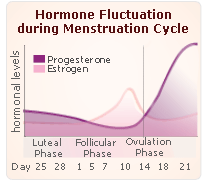
(Image and data from www.natural-hormones.net ; and Speroff, et al. (1989). Clinical Gynecologic Endocrinology and Infertility. 4th ed. Baltimore: Williams & Wilkins.)

And why do we care about the stupid numbers? Well, WE don't. But it's those psycho anal physicians that are so addicted to numbers, that we have to feed them lab results at least once or twice a week in order to prevent them from having withdrawl symptoms.

Either that or those mad scientists with data fetishes. Sometimes, I can't tell which. (Image from http://www.arronbailiss.co.uk/).

Down on Your Luck: Low Levels of Progesterone

Symptoms of low progesterone are those that involve the men running sreaming and the women wanting to beat the living tar out of them. Either the woman's progesterone is low or the man was caught cheating. Either way the woman is irritable, sweaty, and ready to break something.

Low Progesterone Signs and Symptoms:
  • Irritability
  • PMS/ Mood swings
  • Difficulty concentrating
  • Memory deficiencies: memory loss, lack of mental acuity, brain fog which is not to be confused with brain freeze. That is derived from drinking huge amounts of Slushies too fast. [And yes, if you were wondering, low hormones have been linked to Alzheimer's disease*. ]
  • Insomnia
  • Hot flashes/ Night sweats
  • Anxiety/ panic attacks
  • Depression
  • Irregularity of menstrual cycle
  • Abnormal/ excessive uterine bleeding
  • Uterine fibroids
  • Uterine cancer
  • Strong cramps during menustration
  • Greater presence of blood clots during menstruation
  • Vaginal dryness/ irritation
  • Joint pain/ muscle pain
  • Breast tenderness
  • Frequent urinary tract infections
  • Headaches, Dizziness
  • Weight gain
  • Edema /bloating (water retention)
  • Fatigue
  • Dry skin
  • Low blood sugar levels
  • Deficiency of Magnesium ( This kind of has the chicken vs the egg dilema about it.)
  • Thyroid malfunction
  • Gallbladder disease
  • Infertility/ difficulty with conception
  • Lack of libido (Men tend to mourn this aspect.)

I do have to state here that low thyroid (or hypothyroidism) can mimic many of the signs and symptoms of low progesterone and vice versa. It is especially important that you contact your healthcare provider when you experience any of the above.

Granted, in the case of dizziness, fatigue, and headache, these symptoms are very ambiguous for medical practitioners. They are like the needle-in-the-haystack: You have the needle, but now you have to figure out which haystack it was in and how it got there.

In my next post, some natural and medical methods of relieving the symptoms of low progesterone will be discussed.

References list:
*Carroll, J.C., et al. (2007). Progesterone and estrogen regulate Alzheimer-like neuropathology in female 3xTg-AD mice. The Journal of Neuroscience, 48: 13357-13365.

Simpkins, J.W., et al. (1997). Role of estrogen replacement therapy in memory enhancement and the prevention of neuronal loss associated with Alzheimer's disease. The American Journal of Medicine, 103:19S-25S.

Vongler, J.M and Frye, C.A. (1999). Progesterone in Conjunction with estradiol has neuroprotective effects in an animal model of neurdegeneration. Pharmacology Biochemistry and Behavior, 64: 777-785.

Other links regarding low progesterone:

http://www.diagnose-me.com/cond/C8779.html

http://www.tarunaoils.com/articles/low-progesterone-levels-signs-symptoms.asp


Tuesday, July 13, 2010

Mandrakes, Mallots, Malts: Natural Anesthetics?

Okay, I am writing two separate posts at the same time. Do you realize how brain fogging that is? ;) It's like listening to a bunch of Irishmen after they downed 20 Guinness, while eating snapper candy. It just shouldn't be done. ;)

Just for fun, I want to state here a few of my favorite questions:

Why are most politicians evil? Because in the job description it says, "several years of experience in evil-doing, lying, cheating, and stealing required for employment in this position". ;)

Why are evil dark overlords politicians in training? Because everyone has to have retirement plans. See required politician experiences.

What do storm troopers wear under their uniforms? Smiley face boxers and t-shirts that say "I love carebears." It's totally obvious. (image taken from http://www.shutterpoint.com/Photos-ViewPhoto.cfm?id=184251)

But the question of the day is:

What are some natural anesthetics?
This was the great inquiry made by a wonderful blog follower that I decided to write this post in response to. (I'm biased: I love my blog followers.)

So let's start with a little medical history. Okay, I think I just lost half of my viewers with the "history" comment.

Historical Natural Anesthetics:

Now, I am not an expert on the natural ways of numbing, so I grabbed my knapsack, couple of bottles of generic filtered tap water that I was charged a buck a piece for, and went on an epic journey to research natural pain killers. [First, I looked at historical analgesics. You know, there is something to be said about some wives' tales: just not the ones that told knights that they needed to be sewn into their armor for good luck. Funny, but so wrong on so many levels.]

Anyway, after that search, I discovered many things. One, Harry Potter was right: people did actually believe that mandrake plants killed you with their screams. (Please enjoy this refresher video of Mandrakes. Mandrake - Harry Potter and The Chamber of Secerets).

And two, our ancestor's were whacked out of their gord.

I am not kidding, this is the first time that I can honestly say, "what the heck were our ancestors were thinking?!"

Seriously, I wonder how any of them survived long enough to create the next generation.

Most of the "numbing methods" they applied centered around doping themselves up enough hallucinogens to ride magic carpets (now, we know why they have those freaky fairy tales), hitting each other in the head with massive hammers, downing keggers of beer, and eating plants that are lethal.

Well, that explains a lot of historical events.

Hitler being voted in. Definitely a bunch of people on natural pain drugs. The voter cards looked blurry under the flying spots and fairies. They mistook Hitler for "hit here." (Actually, "hier" in German, but eh, details, details.)

The Third Crusade. It was all in the mead. Who else but drunks would head into the hottest, nastiest area of the world wearing heavy armor and start a war?

Atlantis. They took the Bugs Bunny approach to numbing methods and beat each over the head with mallots, then became lunatics thinking they could take over the world. Why else did God send their island into the ocean?

Easter Island. Self-explanatory. The entire population ate their weight in lethal mandrakes.

At any rate, the ancient methods for pain reduction were in fact:

1. Halluciongenics such as opium, and cocaine
2. Alcohol (largely whiskey and wine)
3. Striking the patient in the head (either by placing a helmet over the person's head and hitting them with a mallot or by giving them a good punch to the jaw. They lost a couple teeth, but hey, they were unconscious during surgery).
4. Mandrakes (a potentially lethal plant from the nightshade family)

Well, we can't knock them for trying. In all honesty, we pretty much use the a few of the same things for pain relief.

The analgesics Lortab and Vicodin are semi-synthetic derivatives of the opioid family. (Codeine and thebaine are two of the naturally occurring opiates used in the creation of these drugs.)

And come on, I know there are a few of you out there that wanted to deck that guy that was screaming in pain. (Please see reasons why not to go into medicine).

Anyway, let's discuss mandrakes (Mandragora officinarum). These are members of the nightshade plant family (Solanaceae) and genus Mandragora. [Included in the nightshade family are potatoes, tomatoes, peppers, and eggplant.]

The genus Mandragora, on the other hand, realistically should be included in the hallucinogens category, but I want to give them their own attention.

The mandrake contains alkaloids such as scopolamine, atropine, and hyoscyamine. These are potentially deadly substances. So it wasn't the screaming that killed them, it was the alkaloids.

Atropine is used as a treatment for organophosphate poisoning (pesticides) and used to resuscitate patients with severe bradycardia. (For more information see: http://www.cvpharmacology.com/antiarrhy/atropine.htm and http://en.wikipedia.org/wiki/Atropine).

Not only are the Mandragora potentially deadly, they actually promote inflammation and pain. They produce a number of alkaloid chemicals that can range from irritating to lethal.

So why am I telling you this? What is this historical lesson good for?

One, our ancestors were a bunch of neanderthals when it came to medicine. But... although crude, the doping, drinking, and clobbering approaches, were actually affective.

Two, mandrakes, instead of being used for pain relief, can be used to treat organophosphate poisoning which is a life-threatening condition.

Three, for chronic pain or headache suffers, avoiding the nightshade family altogether (tomatoes, potatoes [especially the green and sprouted spots on potatoes], sweet and hot peppers, eggplant, tomatillos, tamarios, pepinos, pimentos, and paprika), actually does help lessen chronic pain symptoms. (For more information please see http://www.whfoods.com/genpage.php?tname=george&dbid=62. and see also, http://naturalmedicine.suite101.com/article.cfm/nightshades)

Lastly, I am still looking for natural anesthetics that are safe and available for disaster medicine kits. Sorry. I wish I could have found something more helpful. Apparently, the best things that we can store up are the prescription analgesics and local anesthetics.

So far, I have been unable to find any natural ones that have been scientifically proven to be safe and to actually work. For the sake of my viewers, I will keep looking.

TTFN.


Tuesday, June 22, 2010

Wound Closure: Up-close and Personal

Okay, so I have been ditching my posting duties. It has been a few months and you haven't heard one lick from me. I know, I know. You were wondering if I was abducted by aliens. Well, they did land in my backyard: I offered them lemonade, and sent them on their way, but inadvertently, no abductions. (Image taken from http://noliesradio.org/archives/1954)

Sorry, I know you're disappointed: I have no alien anal probe experiences to share, but I can tell you about a lot of colonoscopies I have assisted in if you're interested. Man, there were some colons that would reek so bad that--. Wait, you want me to talk about wound closure instead? Are you sure? I mean I can really give you a riveting story about the day that the Sick Colon Struck Back.

Oh, alright. Fine. Be that way. See if I ever tell you about colons again. ;)


Wound Care: Anesthesia

Since we have past the medieval ages, we have ways of numbing wounds. When I was looking up videos for lidocaine injections, I found a great site that gave the following list of subjects:

1. Inject insulin
2. Inject local anesthetic into a wound
3. Pick locks with a strategically placed bump key
4. Prepare an insulin syringe to inject a diabetic cat.
(Image derived from http://www.watercure2.org/pet_testimonials.htm)

Yes, that is the actual list. Hmmm, so let's ask: which of these doesn't belong? The picking locks or the diabetic cat? I think I will go with the cat. (please see: http://www.wonderhowto.com/topic/inject-lidocaine/). (Image taken from http://thegreatgeekmanual.com/blog/motivational-poster-lock-picking)

Back to the blog at hand: Last time we discussed wound irrigation and the different types of antiseptics. So I am going to leave that out of this discussion, except to say: Please irrigate and clean the wound before administering anesthetic.

Okay. Okay. There are a bunch of whiners out there that couldn't handle a wound cleaning if their life depended on it. So in their case, just sterilize your injection site first then give the local anesthetic then clean them. Whine whine complain.

But for everyone else:

1. Irrigate

2. Clean

3. Prep the area with an antiseptic.

4. Prepare a 27 or 30-gauge STERILE UNUSED needle synringe with around 3 cc of anesthetic. (Wipe the top of the anesthetic bottle with alcohol pad before inserting the needle. Draw out 3 cc or more solution.)

5. Infiltrate the skin (epidermis) at the edge of the wound with the needle bevel side up.

6. Create a skin wheal by slowly injecting approximately 0.5 cc of anesthetic into the area. (Note: To all the trigger fingers out there, refrain from turning the injection into a Nascar race. Rapid injection produces painful swelling of the tissues.)

7. Redirect the needle within the wheal if needed. Once the first wheal is created, you can always redirect the needle within it towards a different direction and add an additional 1 cc of local into the dermis. If needing to re-enter the skin for further injections, try to re-enter a site that is already blanched or part of the wheel you made previously. This will prevent further pain, because you will be entering a site that is more likely to be numb.

8. Go get a hamburger. Enjoy a good movie. No, just kidding, but you can afford to wait a couple minutes for the anesthetic to take affect. A good injection will leave a thick wheal line around the edges of the wound and take into account its depth.

9. Gently poke the wound area that you intend to suture with a sterile needle (you can use the one you injected them with). Now, this doesn't mean go for the gold and poke 'em like you mean it. Gently means gently.

The patient should feel pressure but nothing sharp. If they feel something sharp, one they may slug you; and two, you need to add more local to the area.

Anyway, I promised you that I would discuss lidocaine. Truthfully, I thought about running to South America before giving the lidocaine interview, but alas, the border patrol saw I was an Amercan with out papers and I got deported. :)

Lidocaine vs. Bupivicaine

This is the "Tastes great. Less filling" debate of wound care. You may see the anesthetic protests and WWF smackdowns at a local hospital if you are lucky. I think I saw a surgeon take out an ER doc over this once.

These two are the most commonly used local anesthetics. Lidocaine being the very most common. In fact, it is widely used for the majority of cases, but Bupivicaine is used in situations that needed a longer duration of coverage. Those type of situations generally involve complex wounds that would require a greater amount of time to close.

I have been known to make a Lidocaine-Bupivicaine cocktail. Mix in a little epinephrine and some Sodium Bicarbonate and my patients love it. Shaken not stirred.

Lidocaine with epinephrine (the most popular, kind of like the Homecoming Queen of anesthetics) generally lasts 2-6 hours.

Bupivacaine (Marcaine) with epinephrine generally lasts anywhere from 3 hours to 7 hours.

Note: if you want to be nice to your patient and you have it on stock, add some Sodium bicarbonate to the mixture. You just draw enough Sodium bicarb to cause the clear solution to turn cloudy. That is the chemical reaction of the Sodium bicarb neutralizing the acidity of the anesthetic, thus relieving the burning sensation of the acidic local.

So, let's take the ' why epinephrine?' quiz:

Why do you want to include epinephrine?

A. Because the pharmaceutical companies told you so.

B. It blanches the skin, helping you to better identify which areas that have been numbed.

C. Because it decreases bleeding. Nothing says, blood go away like epinephrine.

D. It increases the maximum dose of local you can apply to the area. It vasoconstricts blood vessels thus preventing systemic absorption of the anesthetic.

E. All of the above.

F. B,C, D and forget about A

The answer is F. Sorry to all those that chose A. I know, you were tempted to break down the pharmaceutical company doors for forcing you to add epinephrine to local anesthetics, but we must refrain.

When considering whether or not to use a mixture with epinephrine in it, please remember one important rule:

Epinephrine should NEVER be used in the following areas: Ears, Nose, Fingers, Toes and male anatomical parts.


Top Five reasons why you don't want systemic absorption of lidocaine:

1. Wastes lidocaine. Hello, you're in the middle of a disaster. Is the pharmacy going to be open. ;)

2. Aliens don't approve.

3. Your mother told you not to.

4. Because the cows might attack. Udderly terrifying. (Image taken from http://www.robmillard.com/archives/cat-off-the-wall-insights.html)

5. Lidocaine is used to treat disturbances in heart rhythms and can stop a normal working heart.

I don't know, I think number 4 is the most important. ;) Those cows can be dangerous.

Interestingly enough, lidocaine decreases the sensitivity of cardiac muscle to electrical impulses. No. We don't want insensitive hearts. We need sensitive hearts to cry, to love, and to live.

Lidocaine acts by slowing the conduction of electrical signals within heart muscle. Thus, it helps restore the heart's rhythm in conditions such as irregular and incresed contraction of the ventricles (ventricular tachyarrhythmias). (please see http://www.netdoctor.co.uk/medicines/100001501.html for more information on lidocaine and heart arrythmias, and also http://en.wikipedia.org/wiki/Lidocaine)


Here are a few good sites providing more information on anesthetics:

Local Anesthetic

How Anesthetics work and their History

Why you shouldn't go Butt-crazy in administering local anesthetics


The following are some really great videos further explaining the administration of local into a wound as well as the basics of suturing. Yes, I'm being lazy. If there is a good video out on the subject, why should I have to write it? Besides, the aliens say no more writing until the mind probe is activated.

So until next time. TTFN.


Injecting a local anesthetic into a wound:


Basic Suture Technique:


Suture Technique Part 2

Saturday, March 20, 2010

There is More Than One Way To Sterilize a Wound

I know. I know. If I steer away from the beloved alcohol post, you won't be able to enjoy the bitter beer face anymore. Don't cry, moving on is an important part of life.

Yes, the sensational appeal of an old scary man bringing his bottom lip up high enough to swallow his whole head just brings tears to our eyes, but... No more beer for you! ;)

Since, alcohol is such a volatile substance to be pouring on any wound, I'm going to move to more gentler and practical means of sterilizing and cleaning wounds.

Cleaning wounds:

Everyone loves having their wounds cleaned, especially when we have to take a wire scrubbing brush to them just to clean out the debris and dirt.

In a different post, I will discuss the need for analgesics and the favorite question of how to administer lidocaine. Although, if you were wondering, it would be good to have 1% Lidocaine and topical Lidocaine gel in your trauma kit. Otherwise, your patient, if they are still conscious when you start messing with their wound is going to beat you like a red-headed stepchild in a drunk family.

So moving on to wound irrigation and cleaning. I, personally have a dozen lactate ringers, three dozen normal salines, and a bunch of contact lens cleaner (works just as good) in my personal kit for wound irrigation. But I like irrigating wounds, it's fun to watch big chunks of crap fly out an open wound to hit your assistant.

Rule one of proper wound irrigation: Aim the irrigation so that it sprays and hits your partner. It never gets old.

Tap water also can be used to clean a wound as long as there has been no earthquake or radiation in the area. Tap water is obviously not as good as sterile saline, but oh, well... if you're not a wound cleaning junkie like me, then you might not have the solutions on hand.

But just for the heck of it, a good home solution for wound cleaning is tap water and Johnson & Johnson Baby Shampoo.

People always ask me about Hydrogen Peroxide (H2O2) in connection with it being an antiseptic, because they see it a lot be mixed with water and used to flush out some wounds, especially things within the ear. It's a good cleaner, just as water is a good cleaner.

Yet, unfortunately, H2O2 isn't that great as an antiseptic, because it has only minimal bactericidal effects, especially the dilutions of less than 3%, but it does make cleaning the infection funner... ahem, I meant easier.

Ever wondered why hydrogen peroxide foams: Cells contain an enzyme known as catalase, which floats around in wounds and also many bacteria are catalase formers. When catalase and peroxide come in contact with each other, they react to form water (H2O) and Oxygen (O2). The bubbles that you see are oxygen being released from the liquid.

A good way to test this is to put hydrogen peroxide on a cut potato. Cut potatoes are rich in catalse.

So all in all, it really doesn't do jack, but watching it bubble makes us feel better.

So you clean the wound by hosing it down with enough saline to hydrate a dehydrated camel (yes, they too can get dehydrated), and remove all of the debris.

Anyway back to the real reason why I wrote this post: Antiseptics.

There are many great antiseptics out on the market today, most of which have been tried and tested in clinical studies.

According to the Wound Health Society, the best antiseptics would be Chlorhexidine, Cadexomer iodine, Ethacridine Lactate, Polyhexanide, and Betadine (which is 10% Provodine Iodine).

I prefer Cadexomer then Chlorhexidine then Ethacridine (for topical wounds) and Polyhexanide (name brand is Pronotosan, and is good for wound cleansing). The effects of betadine are not lasting and it has to be applied without re-introducing more bacteria to the area. (Note: On the other hand, the shelf life of betadine is one of the longest.)

I want to add to this list also a gentle antiseptic benzethonium chloride which is a great antibacterial solution for children that can be also used as a hand sanitizer. (Note: alcohol based hand sanitizers can be used as well for would disinfection, but like the regular alcohol: they will burn like a Biggest Loser workout.)

Benzethonium Chloride can be found in products from a company called Pureworks. www.buypureworks.com.

On the natural end of things, I would say 10% Calendula officinalis (pot marigold) and Manuka Honey.

Here are a couple links scientifically comparing many of the different types of antiseptics and wound treatments, just for the fun of it:


Antiseptics on Wounds, Part 1

Antiseptics on Wounds, Part 2


Emerging Treatments in Diabetic Wound Care


What? You thought I would write more? Eh, I'm being lazy today.

But I will leave you with this wonderful add put out by some very well meaning individuals. Enjoy: